May is High Blood Pressure Education Month, and we are spreading the word about how knowing your blood pressure numbers can make a huge difference in your overall health! High blood pressure, also known as hypertension, is very common, affecting nearly half of all U.S. adults. One of our Medical Directors and Primary Care Physicians, Dr. Daniel Frick, has shared why hypertension puts you at risk for more health challenges and how to manage it.
How does hypertension put you at risk for more health challenges?
Hypertension is a risk factor for many different health concerns, such as heart disease, heart attack, and stroke. Consider these key facts:
- Heart disease is the leading cause of death among U.S. adults, and hypertension is a key risk factor.
- 394,000 people in Indiana have coronary heart disease.
- Every 40 seconds, someone in the U.S. has a stroke.
By knowing and managing your blood pressure numbers, you can take a big step towards your overall wellbeing and health, especially the health of your heart. “Knowing your blood pressure numbers could save your life,” says Dr. Frick. “Hypertension is one of the leading risk factors for heart disease, heart attack, and stroke. A primary care provider can track your blood pressure over time and partner with you on a plan to bring your numbers into a healthy range.”
How to manage hypertension
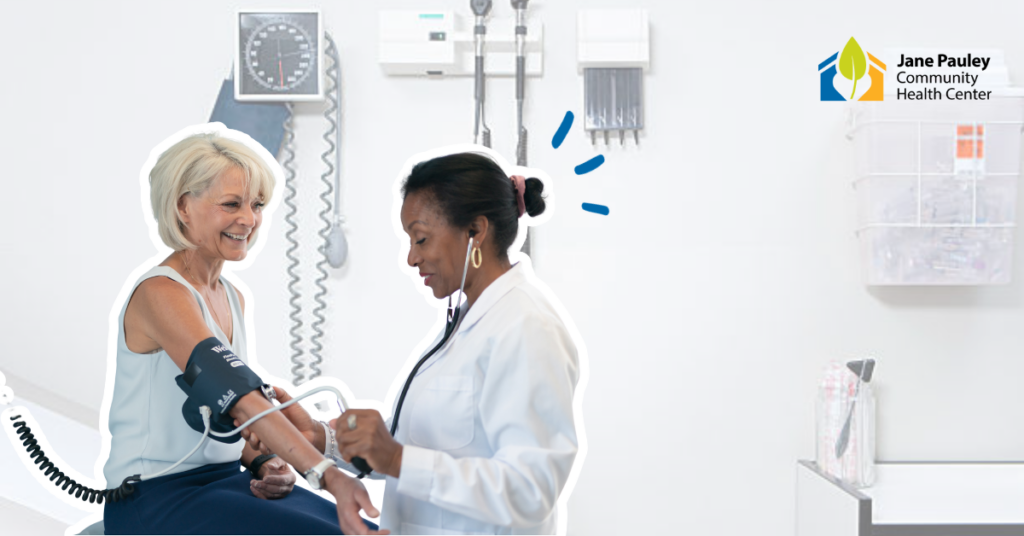
As Dr. Frick mentions in the quote above, meeting with a primary care provider is crucial to tracking and understanding your blood pressure numbers. Regular appointments with a doctor can help you manage hypertension and other conditions and catch health issues before they become more serious. Dr. Frick adds, “Nearly half of U.S. adults have high blood pressure, and many don’t know it. Known as the ‘silent killer,’ hypertension often has no symptoms, making routine health screenings essential to catching it early and preventing serious long-term consequences.”
How we can help
Dr. Frick emphasizes the importance of integrated care when it comes to managing blood pressure, saying, “Preventing and managing hypertension often requires an integrated healthcare approach. Beyond primary care, support from providers such as mental health professionals can help address key risk factors like chronic stress.”
Here at the Jane Pauley Community Health Center, we believe integrated healthcare leads to better health outcomes for many conditions such as hypertension. Call today to make an appointment with a primary care physician and take control of your health!

Dr. Daniel Frick is a Family Medicine Physician and Medical Director practicing at Jane Pauley Community Health Center’s Wigwam site in Anderson. He received his MD from Indiana University and has been practicing medicine for 10 years.